
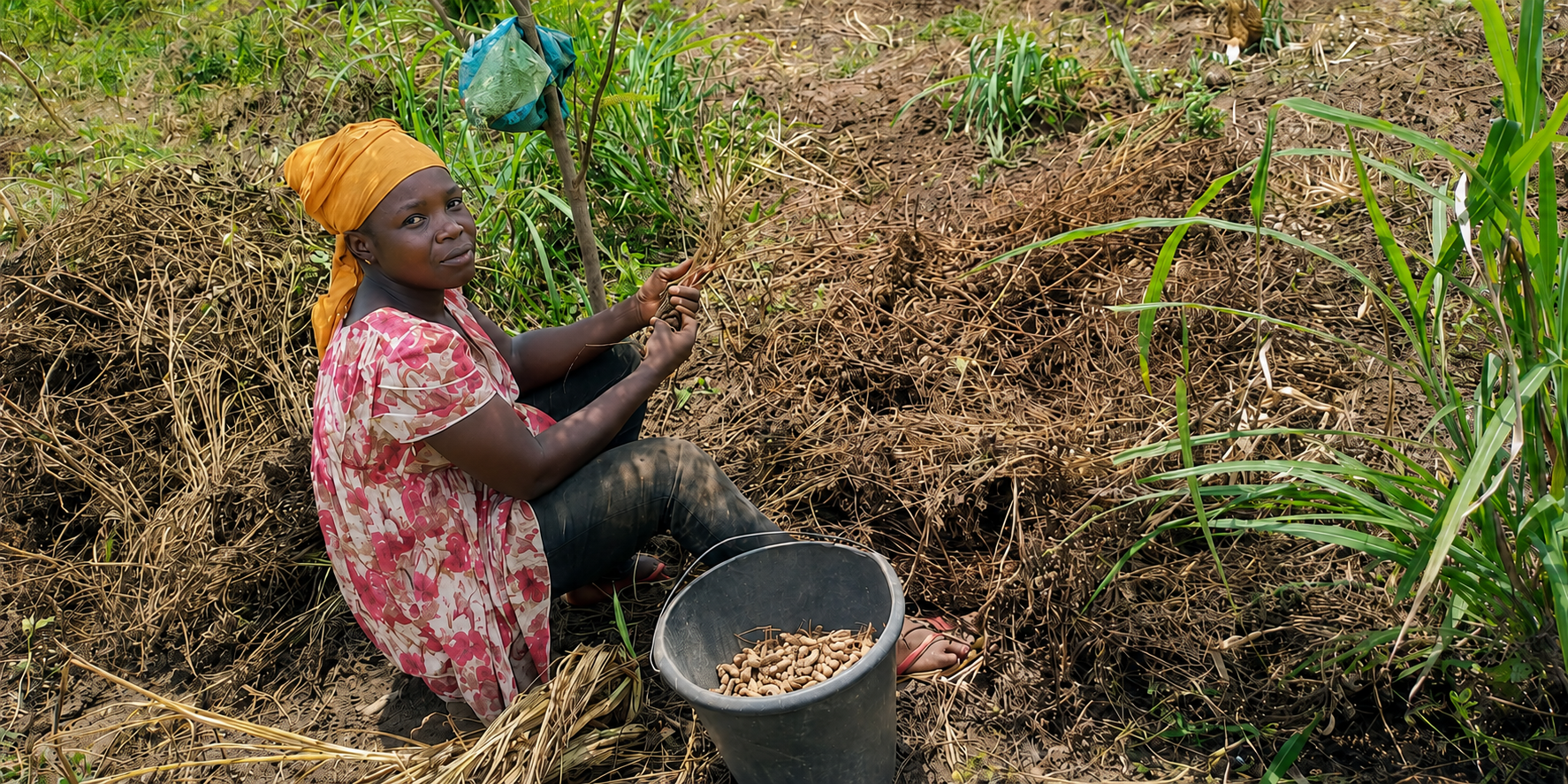
My name is Boateng Elizabeth, a woman farmer under Afrivoices and I am one of the women working on the land within the Black Volta Basin.
When I look at the groundnuts I harvest today, I do not only see a crop. I see what becomes possible when a woman like me is given access to productive land, practical support and an opportunity to work towards a better future.
For many rural women, farming is central to how we feed our families and earn a living. Yet limited access to productive land, finance, irrigation, improved inputs and markets often prevents us from getting the full benefit of our work.
Through the support and community-based approach of Afrivoices of Climate Change, our land we once neglected is gradually being brought back into productive use. Women like me are now cultivating crops such as groundnuts, cowpea and maize, turning the land that once offered little economic value into a source of food, income and renewed hope.
The harvest in front of me represents more than groundnuts. It represents the possibility of paying household expenses, improving family nutrition, saving for the next production season and gradually becoming more economically independent.
But my journey and those of other women should not end at harvesting. I strongly believe that with further investment in climate-smart farming practices, among others, women farmers can move from producing mainly for survival to building sustainable agricultural enterprises.
What we need is not simply assistance. We need opportunities that allow us to own productive assets, develop our skills, access markets and take full responsibility for our economic future. My harvest shows what is possible when degraded land is restored, and women are allowed to turn it into food, income and a better future for their families.